Harm prevention efforts have cut drug OD deaths. Why is Trump opposed?

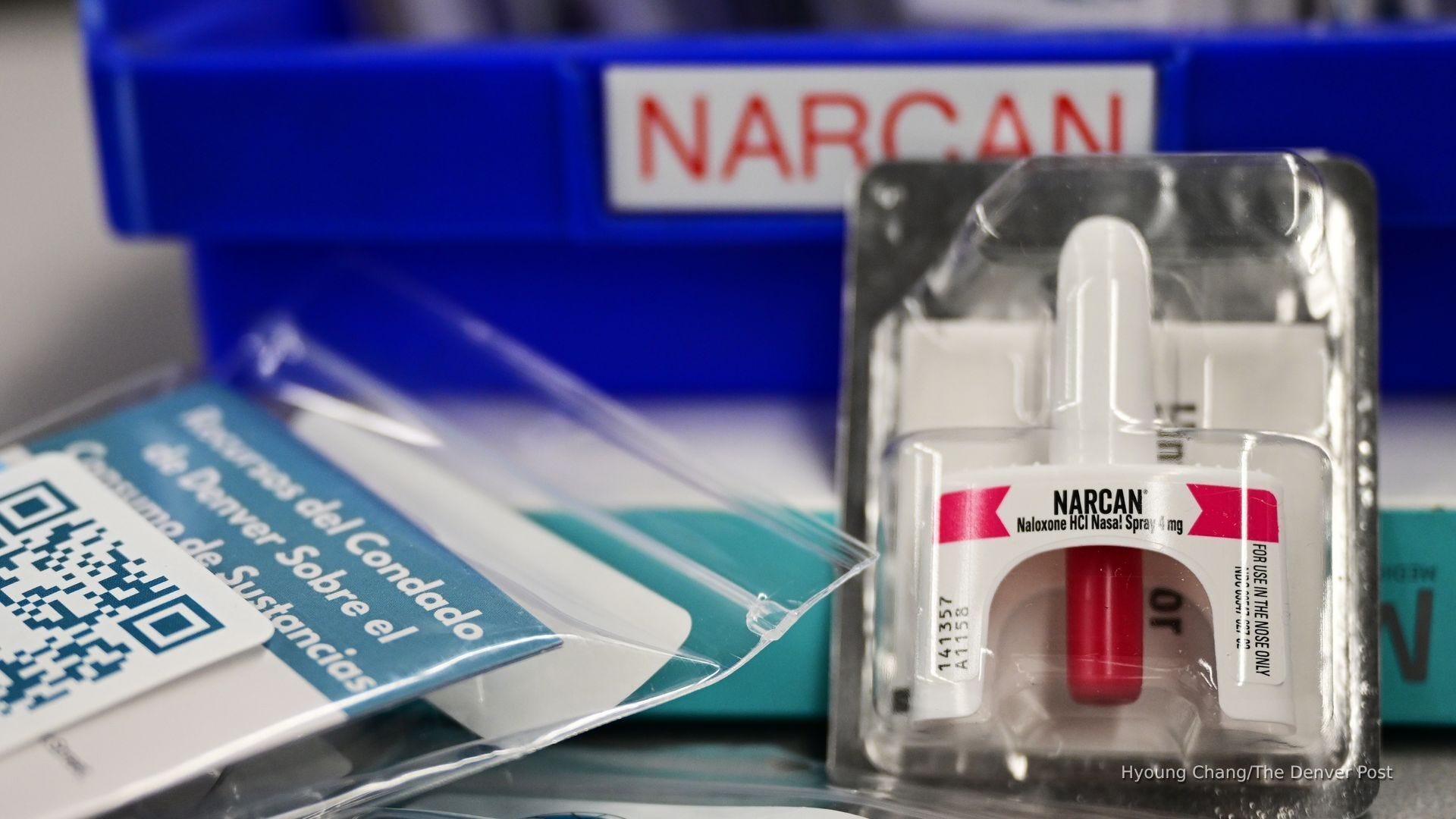

Trump admin looks to cut Narcan grant as fentanyl crisis beginning to wane
The Trump administration is considering cutting a $56 million grant program that provides the lifesaving overdose reversal drug Narcan.
Straight Arrow News
- Overdose deaths in the U.S. have seen a significant decline, attributed at least in part to harm reduction strategies.
- The Trump administration proposes cuts to harm reduction funding, raising concerns among public health officials.
A new report from the U.S. Centers for Disease Control reinforces earlier data showing an ongoing decline in overdose deaths nationwide, and repeats the contention that one of the main reasons for the progress is an approach called harm reduction.
Despite these advances, the Trump administration has proposed eliminating federal grants for harm reduction efforts, a move that Wisconsin public health officials warn could stall gains made in drug overdose prevention. Those concerns were amplified by more than 320 behavioral medicine academic experts, who wrote to congressional leaders May 12 decrying the cuts to these life-saving overdose prevention services.
In February 2025, the CDC released a promising report with provisional data showing that from October 2023 to September 2024, overdose deaths had dropped by more than 27,000. Dr. Allison Arwady, director of the National Center for Injury Prevention and Control, called the nearly 24% decline unprecedented.
The widespread distribution of naloxone, a key product of the federal harm reduction program, was a crucial factor in this milestone, the report found. Naloxone, known by the brand name Narcan, reverses life-threatening symptoms associated with opioid overdoses.
Now, on May 14, the CDC has released a second provisional report showing an even more profound decline from that 12-month time period ― a nearly 27% drop in overdose deaths. The decline in overdose deaths has steadily continued from month to month, the report said. It strongly supported the idea that these strides can be attributed to public health interventions.
Harm reduction makes up one of the four pillars of an overdose prevention strategy prioritized by the U.S. Department of Health and Human Services after Trump declared a national emergency on the opioid epidemic in his first presidential term. The approach promotes getting critical health services to people regardless of whether they use drugs, including safe syringe programs, fentanyl and xylazine testing strips, and the distribution of naloxone or Narcan.
“We accept that, for better or worse, people use drugs. We work to minimize risks and harm that come with drug use,” said Dr. Julia Olsen, a supervisor at Public Health Madison & Dane County. “We don’t condemn or judge people for their use. We try to meet them where they’re at and make sure they can be as healthy, safe and well as they can be.”
In his second term, the Trump administration is walking back aspects of the overdose strategy his first administration spearheaded. In his discretionary budget to Congress shared on the White House website May 2, Trump has proposed removing harm reduction services from the equation, saying the Biden-Harris administration used the approach “to fund dangerous activities … which included funding ‘safe smoking kits and supplies’ and ‘syringes’ for drug users.”
Findings from the Substance Abuse and Mental Health Services Administration tell a different story. The health agency has written several reports suggesting that harm reduction efforts are a powerful public health approach, not only when it comes to mitigating overdoses, but removing stigmas and making safer choices, even when using illicit drugs.
“Of course, we want to prevent these overdoses from happening, but at the same time, we have to recognize that we have a problem on our hands right now, in Milwaukee County, in Wisconsin, in the United States,” said Dr. Ben Weston, chief health policy advisor for Milwaukee County. “We need to address that to save lives, and that’s where harm reduction comes in.”
Milwaukee County has used harm reduction as part of its overdose prevention strategy for years. The county won $101 million from opioid settlement funds in two settlement agreements, one in 2021 and the other in 2023, with companies that supplied opioids. The County Board allocated $11 million to install 11 new vending machines at specific locations — a health center, a concert venue, a social service agency and more — and packing them with free supplies like Narcan, fentanyl testing strips, and medication lock bags.
Harm reduction efforts also break down barriers, Weston said. They can then be a stepping stone for medication-assisted treatment like buprenorphine and methadone, Weston said, drugs that block the opioid receptors in the brain while reducing cravings and withdrawal symptoms.
“Giving buprenorphine not just in a specialized clinic, where you have to wait several weeks to get in, but right there at the time of the 911 call, or whether they’re on the street or under a bridge, in their living room, wherever, harm reduction is key to getting them those treatments,” Weston said.
Grants were used to put services where people are at
While the harm reduction movement has been around for decades, notably during the HIV-AIDS epidemic, it wasn’t until the Biden-Harris administration that it transformed from a fringe grassroots philosophy to a federal drug policy. 2022 marked the first year that the Substance Abuse and Mental Health Services Administration, or SAMHSA, awarded 25 harm reduction grants to agencies across the country.
In October 2023, Wisconsin Department of Health Services received nearly $28 million in substance use block grants, which included harm reduction efforts. In turn, vending machines stocked with free naloxone nasal spray, fentanyl strips and medication lock bags started cropping up on busy streets, in schools, health care clinics and libraries, and in sheriff’s departments.
In 2024, Milwaukee County saw its most dramatic drop in drug overdose deaths since 2018, a decline of nearly 28% from a year earlier.
“Harm reduction is saving lives, which is critical,” Weston said.
Olsen, in Dane County, said that while it’s difficult to prove causation, the county’s received fewer non-fatal overdose calls to emergency medical services (EMS) since the state starting ramping up its harm reduction efforts. And over the last few years, more than 14,000 people have used the harm reduction services at its three public health offices in Madison.
Olsen and Weston both told the Milwaukee Journal Sentinel that access to harm reduction services led to those same people making healthier choices in other areas of their lives. Syringe services, for example, reduce the risks of contracting and transmitting HIV and viral hepatitis, but while there, people can learn about safer injection practices, vaccinations, wound care, and how to get access to social and mental health services.
White House rhetoric mischaracterizes harm reduction concept
The Trump administration plans to consolidate several programs, including SAMHSA, into a unified entity under the new Administration for a Healthy America, which will focus on chronic disease prevention, maternal and child health, and mental health services. The budget would retain $5.7 billion “for activities that were formerly part of SAMHSA,” according to the discretionary budget.
It would not include the $56 million annual grant through SAMHSA that distributes overdose-reversing kits and trains first responders in how to administer naloxone.
Proponents of Trump’s budget, which would cut a quarter of Health and Human Services, including more than a $1 billion from SAMHSA, have argued the cuts are necessary to “streamline operations, enhance responsiveness to the American people, and ultimately improve the nation’s health as part of the Make America Healthy Again initiative,” HHS press secretary Vianca Rodriguez Feliciano told the Milwaukee Journal Sentinel in an email. Feliciano offered no specifics on how the cuts would improve the nation’s health.
Widespread cuts like this, public health officials argue, will reduce access to supplies and resources at a time when communities in Wisconsin and beyond are starting to see the benefits of the federal overdose prevention strategy.
Rhetoric from the White House, too, risks growing misconceptions of what harm reduction is and, significantly, what it is not. Already, the biggest falsehood Weston and Olsen encounter is that harm reduction enables drug use.
“Teenagers don’t decide to start doing heroin because they know they could get naloxone,” Olsen said. “That’s just not how addiction progresses for people.”
Instead, harm reduction offers an opportunity to save lives, Weston said.
“Anybody who knows somebody who has died from an overdose will tell you that they wish that person could have another chance, and they wish they could have intervened, that maybe they could have made a difference,” Weston said. “Harm reduction is that difference.”
Natalie Eilbert covers mental health issues for the Milwaukee Journal Sentinel. She welcomes story tips and feedback. You can reach her at [email protected] or view her X (Twitter) profile at @natalie_eilbert.
link